

the devil wears prada 2
a sequel? for spring? groundbreaking.

The Devil doesn’t wear Prada this time. He wears athleisure. And he’s a nepo baby who uses his inherited wealth to lay waste to quality journalism.
the filmbros on letterboxd might eat me alive for this one, but The Devil Wears Prada is unironically one of the best movies ever. it’s sharp, witty and brilliant in every way. the Harry Potter manuscript sidequest never fails to make me laugh. Stanley Tucci is a gem, and so is Emily Blunt. this should’ve been Meryl’s third Oscar instead of The Iron Lady but you didn’t hear that from me. her monologue about the cerulean sweater is unrivalled.
and hot take but i don’t believe Andy’s boyfriend was the “true antagonist” of the film, and neither is Miranda. they’re both complex and often unlikeable characters but the movie is about her experimenting and trying new experiences and finding herself and becoming the person she wants to be and the only real villain is capitalism, as always she shouldn’t have ended up with him though (forever an Andy and Emily truther sorry), hence why i was overjoyed when i learnt he wasn’t in the sequel.
still, i held off watching the sequel because i’m a massive hater of the vast majority sequels and reboots and biopics etc (the latter is ironic considering i’ve just spent a whole three weeks gushing over the new Michael movie but i digress). they just often seem unnecessary. it was only when my mum asked me to take her to see it as an early mother’s day present did i finally give in.
the marketing
the promotional roll-out behind this film has been so fun. aside from my mum, it was the other reason i decided to give it a go. it thrived on meta-marketing by blurring the line between fiction and reality, and i was so there for it.
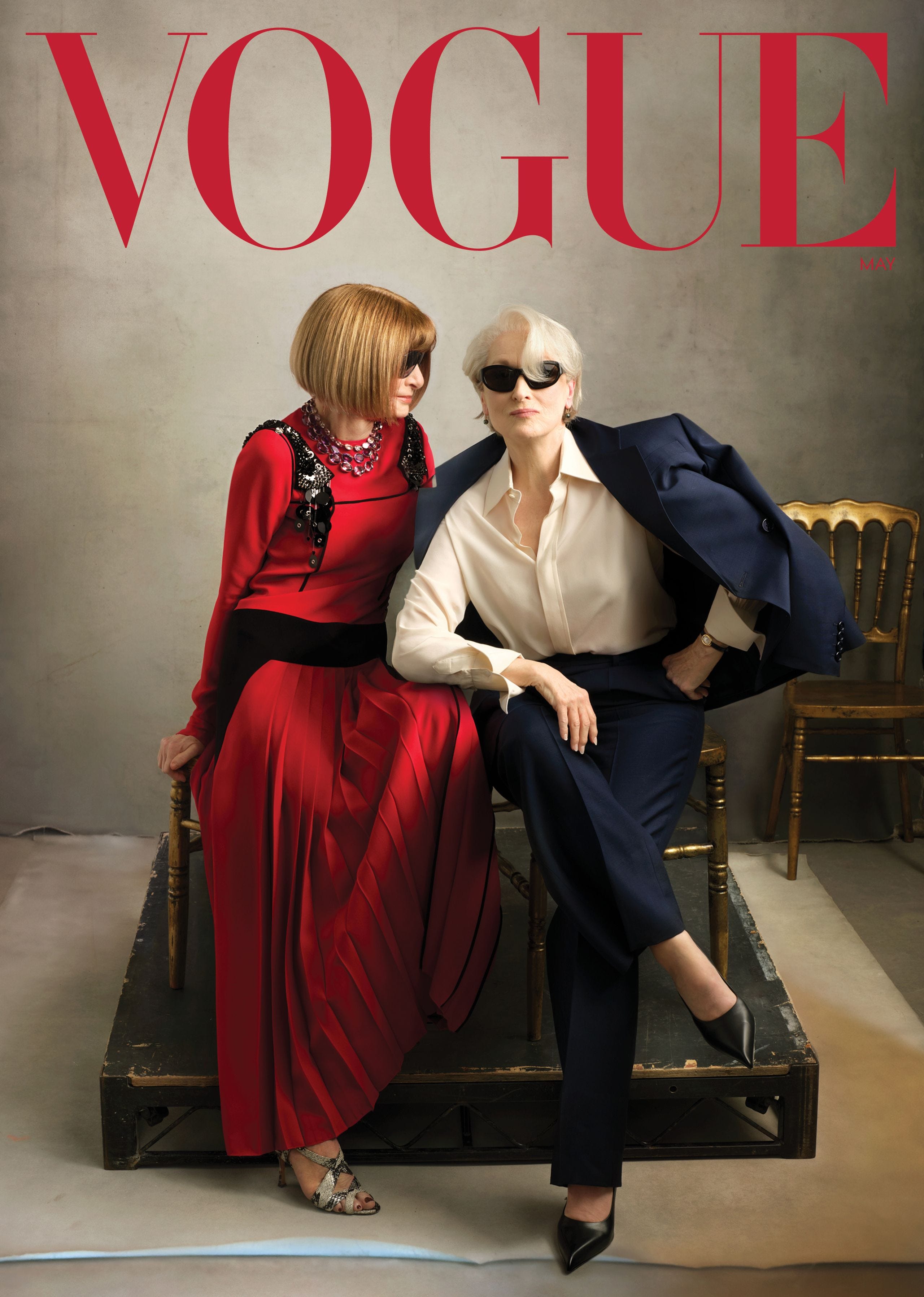
the original film was already heavily associated with Anna Wintour and Vogue, as fans widely interpreted Miranda Priestly as a fictionalised version of Wintour herself. the sequel capitalises on this legacy in the best way possible. in a stroke of genius, Wintour featured alongside Meryl Streep in a Vogue-produced short film, and then shortly after on the cover of Vogue’s May issue.
this creates a self-aware promotional cycle: audiences are not only watching a film about fashion journalism, but are simultaneously engaging with the real-world fashion ecosystem. by grounding the fictional narrative in recognisable industry figures and institutions, the marketing becomes immersive and culturally interactive. one of my favourite things about the original film was how it felt like an extension of the real fashion world, and the sequel only built upon that.
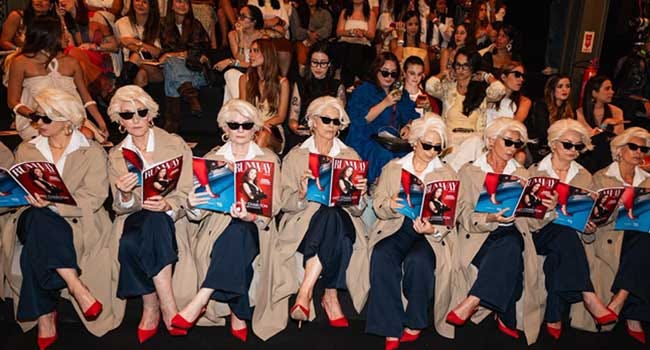
that was my favourite marketing stunt, but it didn’t end there. the marketing for the movie was genius. it was like it was everywhere but nowhere at once; subtle yet so blatantly obvious. consider the ten Miranda Priestly lookalikes that attended Rio’s fashion week in April, sitting side-by-side in the front row reading an issue of Runway.
i could write a whole essay on the marketing itself, but i’ll save that for another time and move onto the film itself. before i start, i do want to say that i wasn’t the biggest fan. i’ve got plenty of criticisms and bones to pick with the film, but i’ll get to that later. i like to focus on the good parts first!
the premise and my thoughts
picking up twenty years after the events of the first film, Miranda Priestly is still the formidable Editor-in-Chief of Runway magazine, but her empire has gone through a drastic downsizing thanks to a depleted advertising market due to the rise of digital media. still, some things haven’t changed. Miranda herself doesn’t look a day older than she did in the original, and nor does Nigel. or Emily. or Andy.
speaking of Andy, she’s now an affirmed journalist who reluctantly goes back to working for Miranda Priestly as the features editor after a scandal regarding the latter unknowingly promoting a fast fashion brand when she and her colleagues get fired from the magazine they worked for.
when she returns to Runway, Andy finds things are very different to when she used to work there. the magazine now runs under a lower budget, while struggling to distance itself from the sweatshop economy. simultaneously, it’s ground down by the fact that nobody even reads magazines anymore. now it’s just chasing clicks in the fickle digital world of social media. this in itself gave me a huge sense of existential dread which i may or may not delve into later.
HR is stricter too - they’re actually doing their job for once - and not everything flies. bosses can no longer throw their coats at you or abuse you in any other manner, which is alien to the tyrannical Miranda. usually i roll my eyes whenever movies try to push the whole “woke snowflake” thing, but for once it made sense. Miranda pursing her lips at the body positivity movement, and getting schooled in politically correct language by her new assistant Amari was so in character.
she even has to fly coach. the horrors.
while Andy and Miranda butt heads once again as they try to salvage Runway’s legacy, Miranda’s other former assistant, Emily, makes a return. she’s now an executive at Dior, and joins Andy on what appears to be plot to save the magazine before stabbing her in the back in a ploy to gain control of Runway herself.
the follow-up was fun, though the film does lose some of its momentum within the middle. some sections drag on, and certain bits of dialogue could’ve been omitted. there were a handful of scenes where i wondered if this film truly was a mistake.
the romance subplots, for example, felt unnecessary.
although it was funny to hear an Australian accent on screen, i was sorely let down by Andy’s dreary and chemistry-free romance with some real estate developer. i was glad he hardly played a role, but i don’t understand why he even needed to be there in the first place. Miranda’s partner, at least, had one memorable scene, though I’ll always see Kenneth Branagh (Gilderoy Lockhart) as the guy who cheated on Emma Thompson (Sybill Trelawney) with Helena Bonham-Carter (Bellatrix Lestrange). damn, what’s up with the Harry Potter cast?
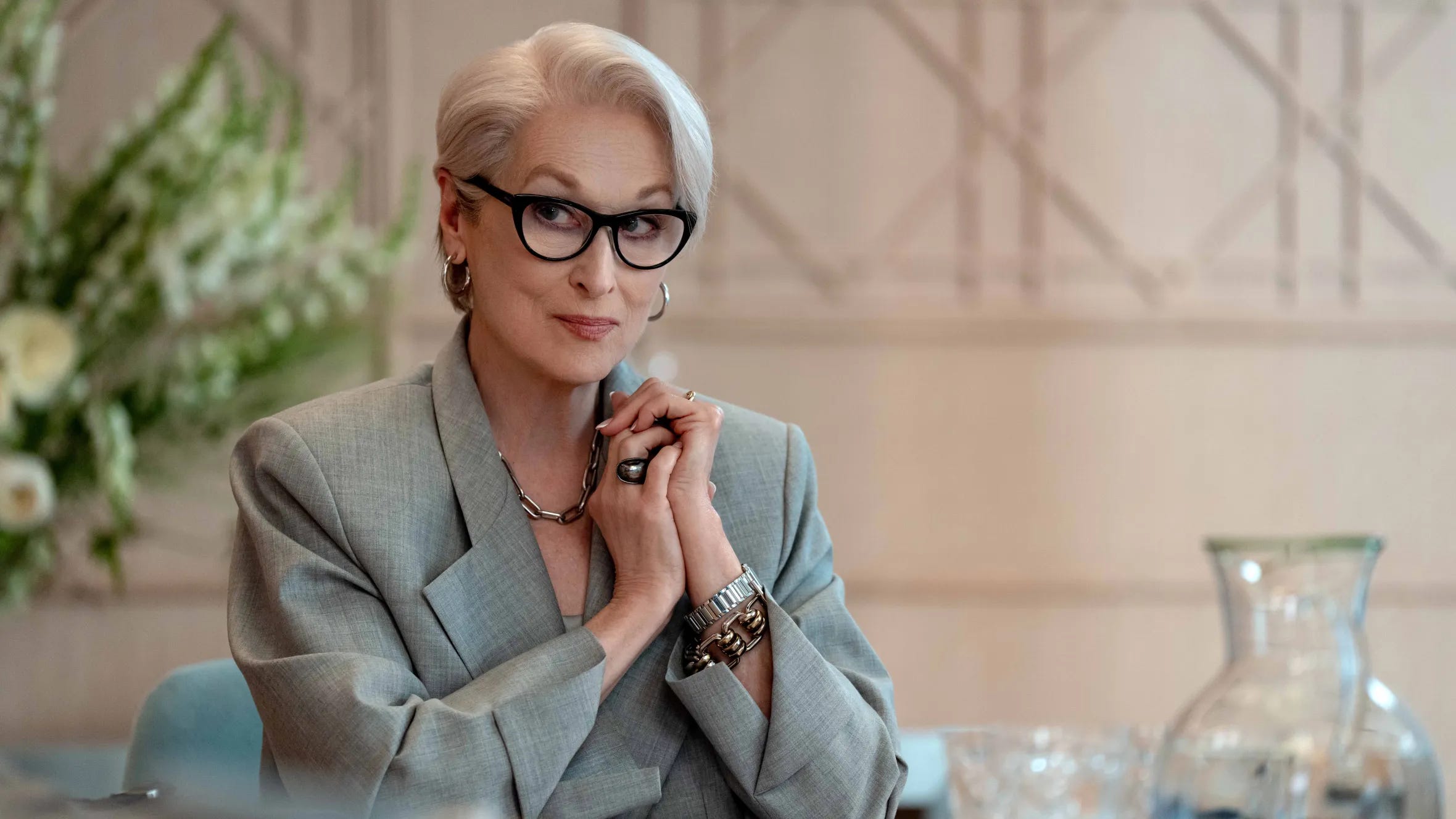
i wasn’t a fan of the romance aspect, but what i did love and admire was how the film stressed the value of people and relationships, like Nigel to Miranda. it continuously emphasised how important it is to have friends by your side to support you when you need it. it’s the kind of people whose presence we usually take for granted, because they’ve simply always been there, but that we should instead make a conscious effort to listen to and cherish more before it’s too late.
more broadly, it emphasised the relevance and irreplaceability of humans and the art only we can create. despite never blatantly addressing AI, there were many subtle digs at it, and i’m always down for artists expressing how much they hate AI through their art. the film spotlights the vital role of creativity in our world and mourns the times when human craft – like the quality of Runway’s fashion journalism – held a more substantial value in society.
i was too young to truly experience the physical magazine era in all its glory, but i vividly recall gushing over the One Direction boys on the cover of some trashy tabloid from the supermarket, and cutting the glossy pages up for scrapbook material. still, watching this made me miss that time terribly.
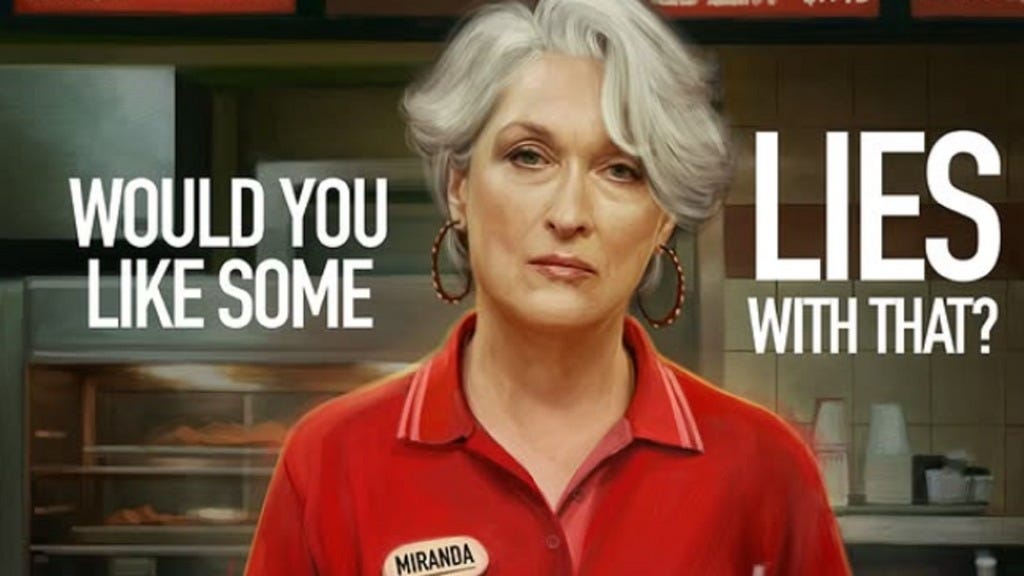
moving on, the film also gives us a lot of celebrity cameos, which is usually a bad sign when it comes to sequels but it worked well in this one. pop culture icons like the interviewer Amelia Dimoldenberg, Radioman and THE Lady Gaga herself made appearances. David Frankel’s work is a clear love letter to fashion and it shows! the movie is constellated by fashion icons like Marc Jacobs, Law Roach and Donatella Versace. there was one notable absence though: the white whale of cameos, Anna Wintour herself. i’m a bit disappointed about this one because i had it on my 2026 bingo board but alas.
bones to pick
time to be a party pooper! although it was somewhat enjoyable, i do have plenty of issues i want to unpack. the story itself shifts aimlessly from one plot to another with inconsequential stakes and vapid resolutions that got quite infuriating when we passed the halfway mark.
this was expected but a lot of the humour relied on the first movie. basically all the comedic moments in the first half were just jokes about jokes from the original and it felt kind of pathetic, like they were going “hey remember, that was funny! remember when you laughed at that joke 20 years ago?” after repeating a joke and then proceeded to not offer anything substantial to follow it up. boring!!!
speaking of boring, let’s discuss the cinematography.
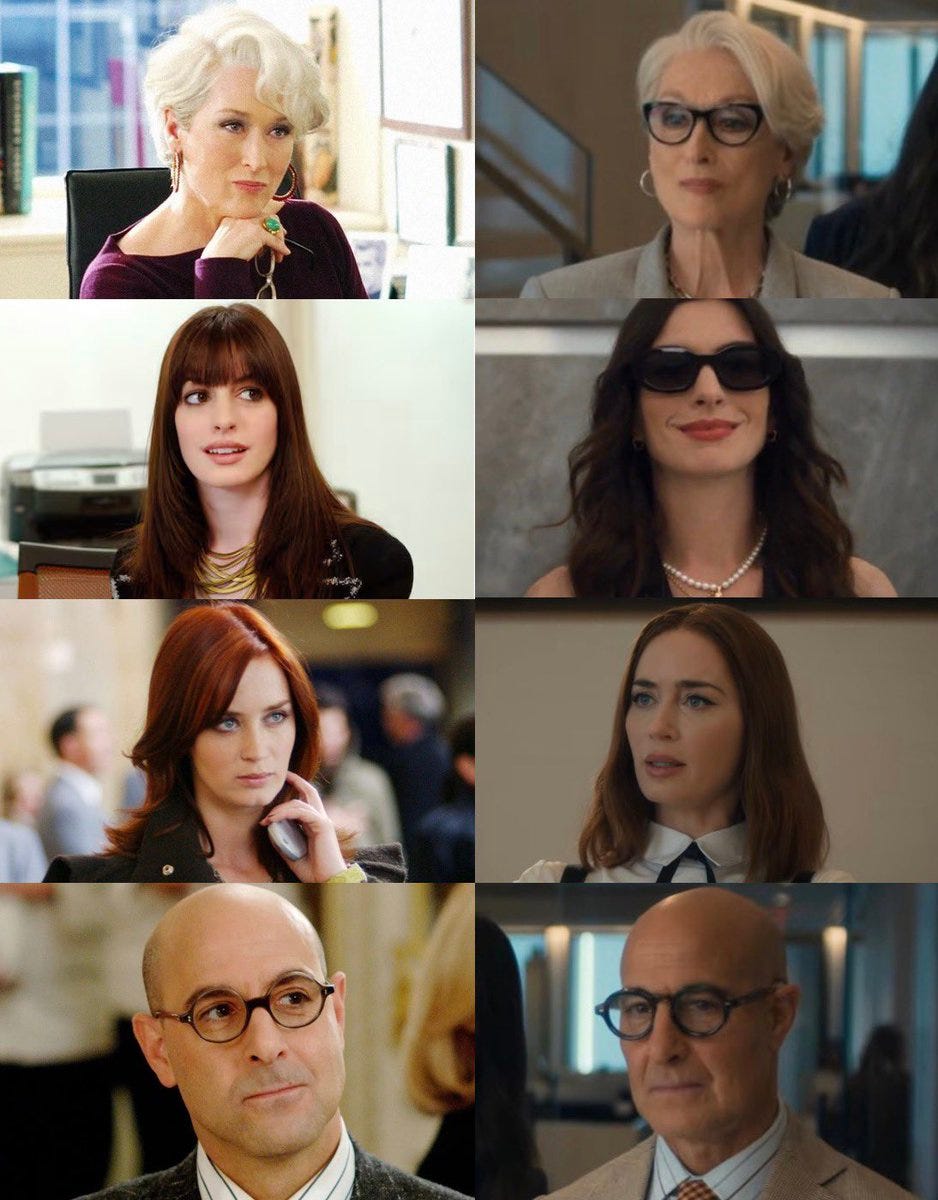
Miranda constantly reminds us how much she despises artlessness and inattention to beauty, yet the movie she’s starring in does nothing but film everything artlessly. don’t get me wrong, we see beautiful things: the people, costumes, locations, etc but the movie makes no attempt to present them beautifully in terms of filmmaking.
everything is shown in what Reddit refers to as “Netflix lighting” and i unfortunately have to agree. it’s dull and bland compared to its predecessor, where the camera work, editing and grading, are all so painfully monotonous. even Emily’s hair is dull now.
the boring cinematography is accompanied by an equally lacklustre soundtrack. the Vogue montage was great, but it was a callback to the original so it hardly counts. Gaga was brilliant, but some of the other needle drops felt out of place, which was a shame since i genuinely love most of these artists and songs. they just didn’t fit. Nice to Each Other by Olivia Dean was blaring while Andy met Emily in a restaurant and it was so ostentatious i couldn’t even focus on the scene. No One Noticed by The Marías also stood out like a sore thumb in a scene where it didn’t make any sense. Laufey’s Mr. Eclectic was a bit better, but it didn’t really match the overall vibe either. the bar is low so i’ll let it slide this time.
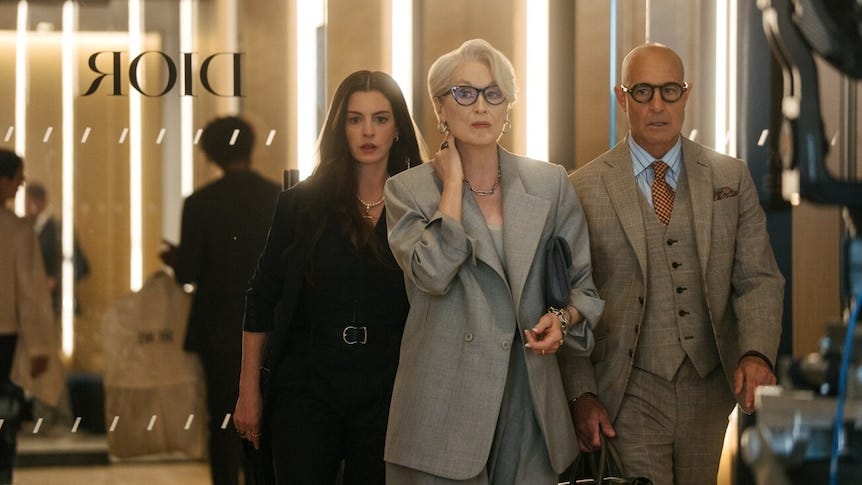
the start was strong, but mostly because it felt rather misleading. the theme about the state of modern journalism which the film pretends to be about in the introduction ends up lost and forgotten in the chaos, which was sad. there are a lot of vague hints at important societal issues like social media and aimed advertisements and mass layoffs in a changing industry, but none of them are actually explored at all.
everything was just so vapid. Runway is suddenly threatened by something, but not really, then by something else, or not. what about this? nope sorry, false alarm. the plot just went by too quickly, ending up in a shallow mess. there seemed to be zero stakes since everything was getting resolved immediately, all while Andy’s greatest dilemma was choosing which luxurious Manhattan apartment to live in.
on the topic of the apartment, let’s backtrack and talk about her love interest again. the story introduces what i believe might be the blandest romantic interest ever. i almost miss her original boyfriend. on the first frame he appears you can immediately tell he’s going to be a pointless love interest.
he contributed less than nothing to the film. the whole time he was on screen i was just sitting there going “why?” like this guy existed for like five minutes of screentime and all he did was share zero chemistry dialogue scenes with Andy, then disappear. and then he showed up again at the end, once again adding nothing to the film.
side note: this is toxic of me but given out youthful Anne looks, it was a bit of a jumpscare to see her paired up with someone around her actual age. maybe that’s just me projecting but whatever. no you know what let’s talk about this.
the fact that their story sucked didn’t help at all. basically Andy encountered him in the apartment she was touring and she said some slightly disparaging things about what she did not realise is his chosen profession (he was the one selling the place).
he didn’t mind, though, and when he arrived to their first date having read up on her journalism work, she’s impressed because none of her other boyfriends ever bothered to do that. i audibly groaned. the bar is on the floor.
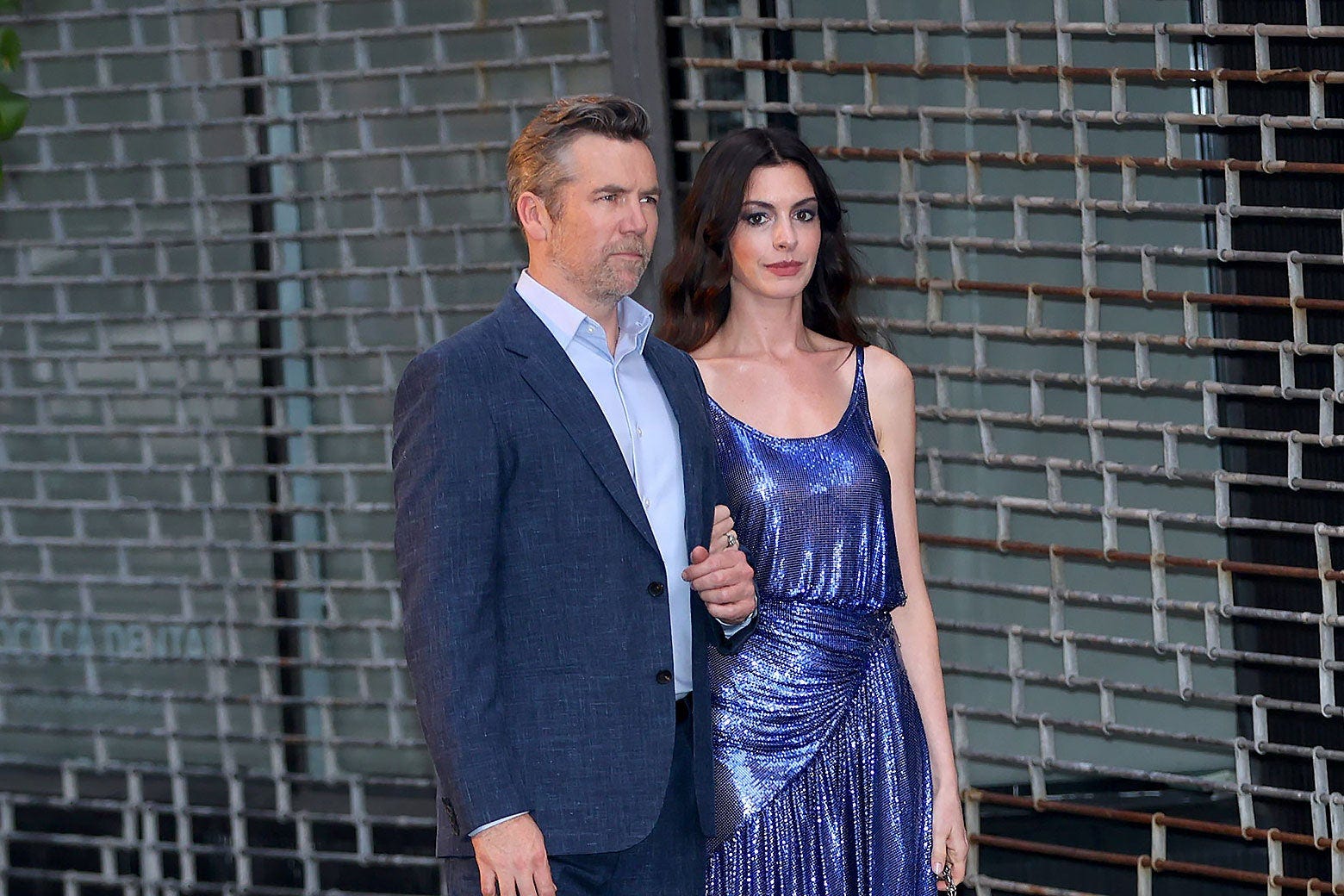
literally nothing about their supposed meet-cute was appetizing, and it just doesn’t help that Patrick Brammel isn’t hot. listen, i’m going to sound like a shallow bitch right now, so let me make this clear: he’s decent-looking, but Anne Hathaway is a literal goddess (or Queen of both Genovia and Ithaca if we’re being sneaky).
i’m a firm believer that looks aren’t everything. it surprises me how acceptable it’s become how someone’s looks has become synonymous with praising their virtue. still, this is Hollywood we’re talking about. even in the first film, Andy’s widely hated love interest was a chef who looked like a model. sure, he sucked, but he was good looking and they regretfully had chemistry so i understood why he was there.
with Patrick, i simply don’t see the intention. even if the love interest was never gonna pla a big role, wouldn’t it have made sense to cast someone who actually had some chemistry with Anne? or at the very least just cast some devastatingly handsome actor to be eye candy because the sequel clearly had its pick of actors.
personally - speaking as the vapid bitch i am - i would’ve just put Theo James in there and called it a day. listen, given the ample nostalgic references to the first movie and a certain musical number, they clearly weren’t opposed to fan service.
maybe there was some deep underlying message behind his inclusion about relationships not being as exciting and romantic as the movies make them out to be. or maybe it was propaganda for gorgeous women to date mid men who do the bare minimum and have an Aussie accent. who knows? NICE TRY HOLLYWOOD but i am NOT falling for any pro-landlord propaganda!!! hell naur.
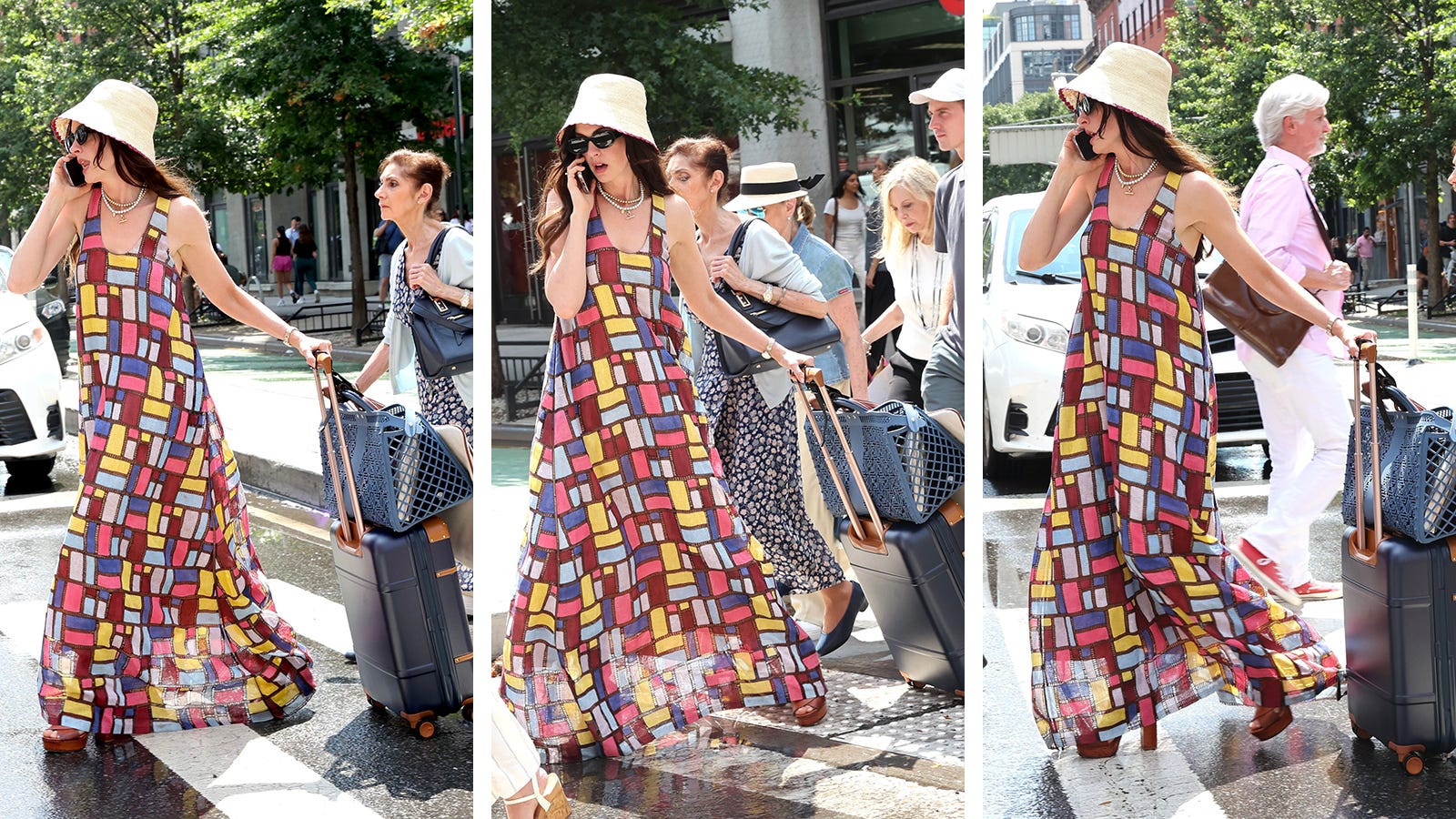
whatever. moving on. can we also talk about that ugly ass dress Andy wore to the Hamptons party? there’s this whole scene where Nigel teases this gorgeous dress that must not be stained no matter what, which we’re not allowed to see because it’s this jaw-dropping thing that will be revealed in due time. we unceremoniously cut to the scene and then the dress is some ill-fitting kindergarten classroom carpet.
i genuinely thought it was just her travel outfit, like there was no way this was the dress he cared so much about. i mean, it got stained and then it was never mentioned again, so i guess not. it’s literally her worst outfit in the movie.
now that we’ve got that stuff out of the way, i’d like to unpack some of the titular characters themselves in a tiny bit more detail.
Miranda Priestly was a toothless shell of herself. she’s cordial, warm, and she lets people walk over her throughout the movie. i understood the HR thing, but she just felt so… approachable? a crime, really. she was just so passive, it was so strange. i like seeing her vulnerable, don’t get me wrong, but that’s where i think the first film did a brilliant job. it managed to portray her as a human but also as that unattainable character who is still Miranda Priestly. this one didn’t do that.
Nigel, my favourite character, was reduced to little more than a background character whose primary job is to utter callbacks to the first movie and dump exposition from time to time. what’s even funnier is that his big achievement and the completion of his arc doesn’t even come from him. he’s literally out of frame and doesn’t have a say in the decision at all, which is especially ironic considering the movie makes it a point that it’s something he should do for himself. and they cut away from his speech. ugh.
mind you Andy herself, who is supposed to be a successful and renowned journalist, returns to Runway as a feature writer to help them restore credibility. and yet the movie specifically says that her writing doesn’t help the company at all and instead of her being a great journalist and helping Runway through her expertise, the only way she actually helps plot-wise is by being very good at making phone calls and annoying people into helping her. we’re back to square one i guess.
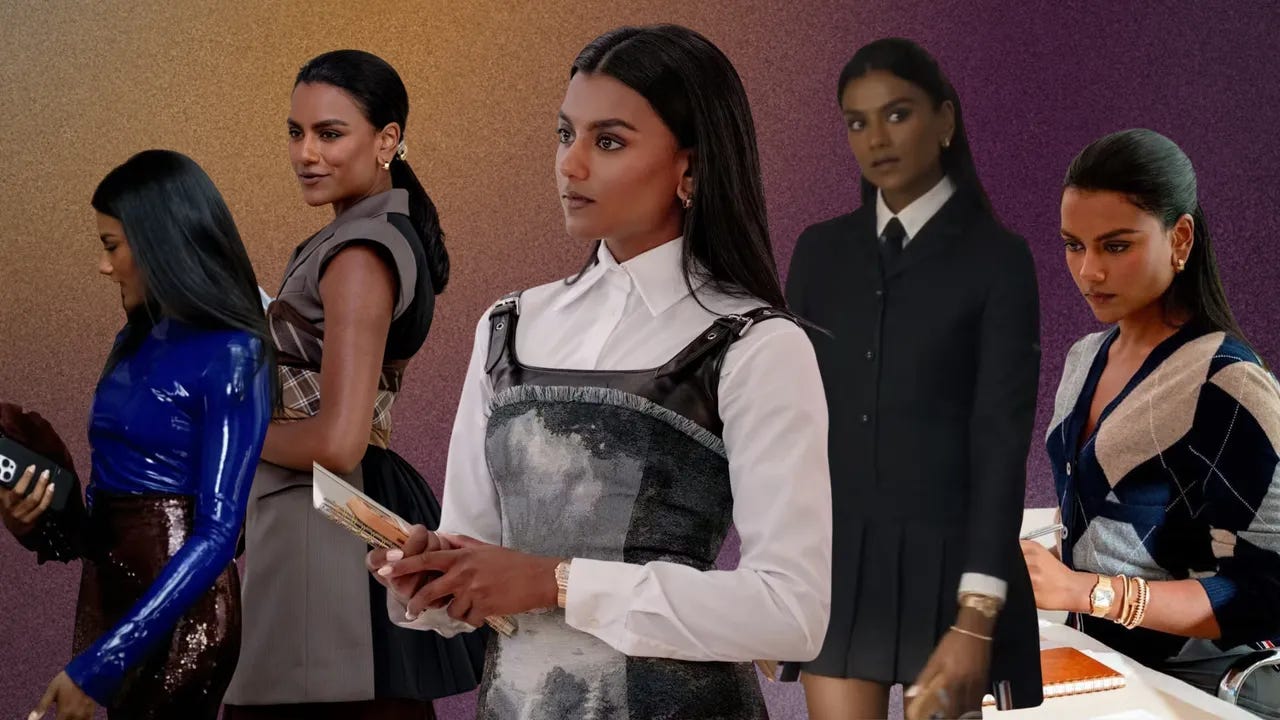
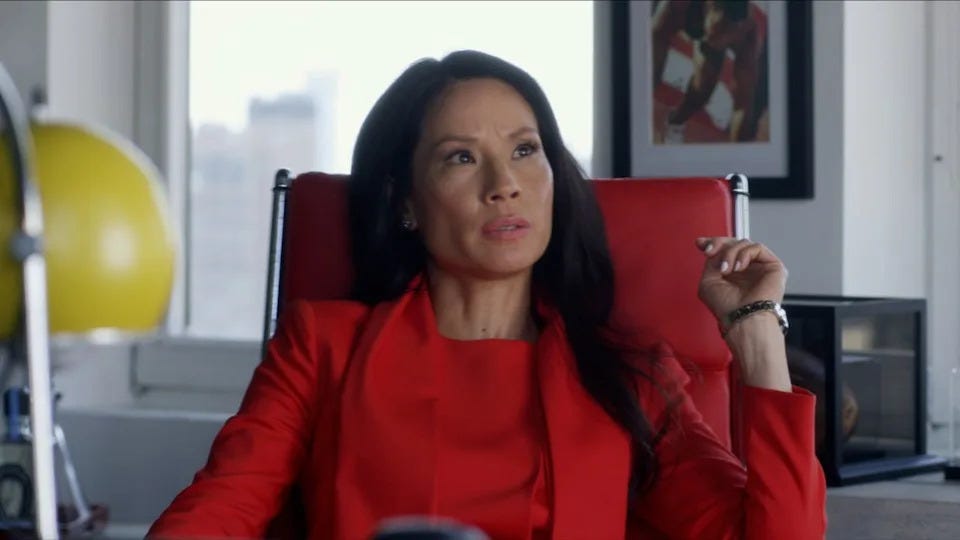
aside from these three the rest of the cast are just supporting characters who are more like cardboard cutouts than actual people. Simone Ashley’s Amari served looks and mogged the entire time but she didn’t add any substance to the film, nor did Kenneth Branagh even though he did have potential. we’re going to forget about Andy’s new boyfriend. even Emily feels like a two-dimensional cartoon villain. Lucy Liu’s character, who the movie keeps insisting shouldn’t be defined by her marriage, is defined entirely by her marriage and relationship status.
existential dread
with all this said, i do appreciate that it brought certain topics to light, even if it filled me with deep existential dread about the future of media while doing so. there was definitely a lot to be said about the modernisation of the world, and the struggles in certain industries adapting to that shift. like how long can we keep boycotting and pretending AI doesn’t exist when it’s going to takeover the vast majority of the online world soon?
women in journalism has been such an iconic part of film throughout the years. look at Carrie Bradshaw, Jenna Rink, Lois Lane, Rory Gilmore, Betty Suarez, Miranda Priestly and Andy Sachs. this movie felt a bit like a sad love letter mourning them, and what journalism used to be.
so yes, while it was a ditzy nostalgia-fuelled sequel at times, it was also quite depressing. it’s hard to keep the tone upbeat when it’s set against the bleak backdrop of a collapsing media industry.
what irritated me was how it vaguely touched on the digital takeover issue and the slow death of traditional media, but it never builds upon it. the ideas feel loosely stitched together rather than fully explored and there’s a lack of natural continuation which resulted in the whole film feeling like a clunky montage.
linking this with the visuals, it just doesn’t help that the film looked flat and dull. there just wasn’t much going on plot-wise, especially in the first half and i wasn’t hooked. the only thing making me not leave then and there was pure nostalgia.
the actors were stellar and their performances are strong as ever, but the writing didn’t give them much to work with. there’s a couple attempts at humour that fell flat, with far less iconic, quotable moments than the original. it’s like they’re too hung up on the past that they forgot to build upon it. you can only ride the coattails of nostalgia for so long.
the lack of charm and wit was quite saddening considering that was what made the original so brilliant, but at the end of the day, capturing the flair and iconic nature of the first film in a sequel made 20 years later is rare, and this at least comes fairly close.
final verdict
the main question on everyone’s lips this week will naturally be ‘is The Devil Wears Prada 2 as good as the original?’ and the plain, honest answer is no.
then again, i don’t think anyone expected it to be. all we wanted was it to be fun and do justice to the original, and for the most part, it did that.
sure, the fashion doesn’t quite hold a candle to the first one, and the storylines were rushed and cluttered, but overall, The Devil Wears Prada 2 feels like a worthy sequel to a movie that’s beloved by fans around the world two decades after its release. if you’re a fan of the OG, you’ll probably enjoy this if you don’t think about it too much. the vibe is still fun and it’s a light, easy watch. it’s completely unremarkable movie, aside from the fact that it’s the sequel to a hugely popular movie, but who cares? it’s fun!
does it capture all the magic of the original? not really but i’m glad my mum got to experience her very own Avengers moment. i still stand by the fact that the beef between Miranda and Lady Gaga should’ve been the main plot of this movie, and that they should’ve called it 2 Devil 2 Prada but whatever, i liked it. plus, it’s the first film in a brilliant lineup for Anne Hathaway this year so that has gotta count for something!
Agree! Sorry for being shallow but 2 Devil 2 Prada is all I retained at the end of this 😅, cause damn that would have been better